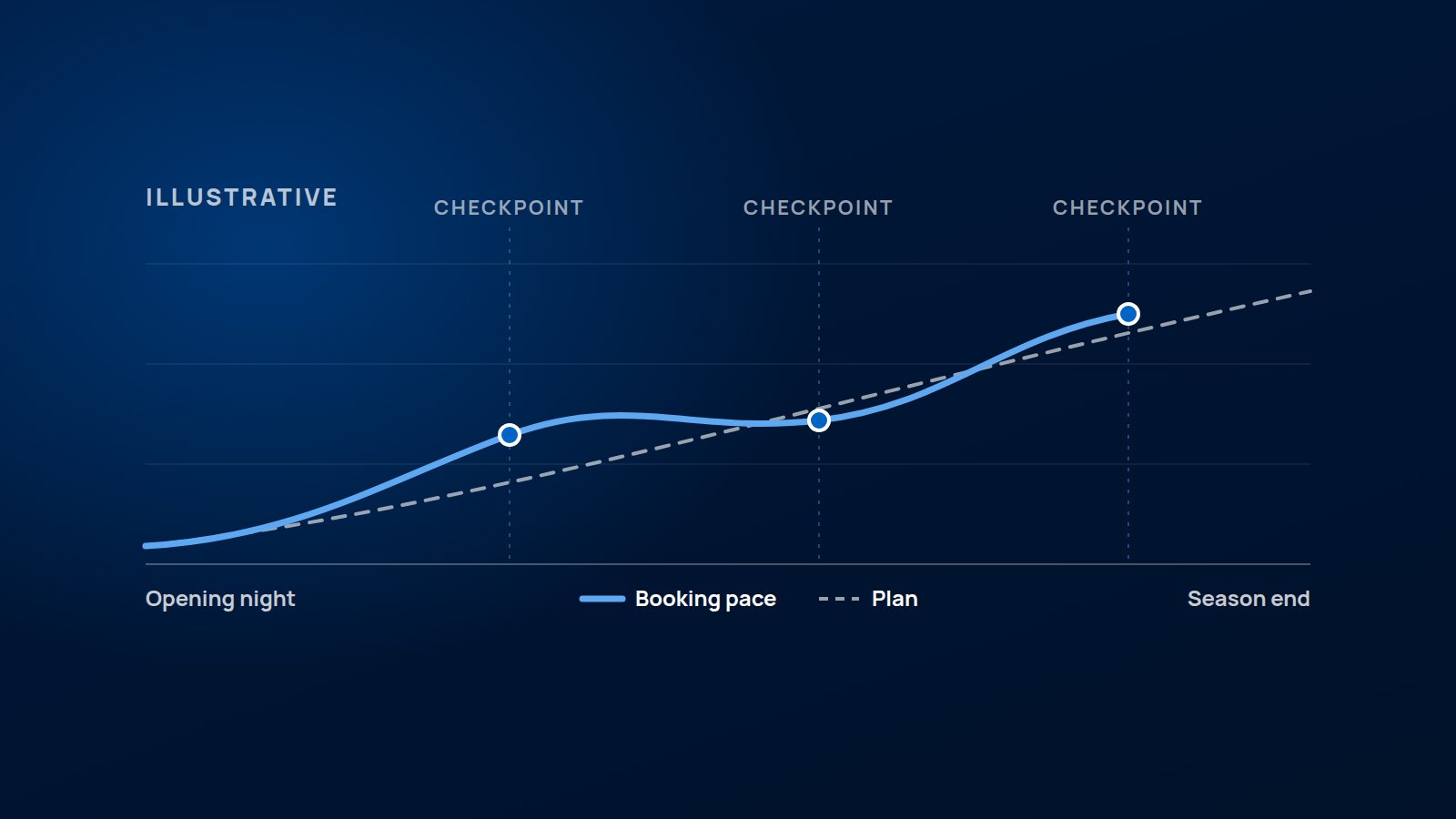
A rental strategy often starts before the season does: set prices, choose which inventory to offer, and build a plan to sell it. But the market keeps moving after opening night.
A team’s performance can influence demand. So can the opponent, day of the week, booking lead time, product, and the buyer’s reason for attending. A strong season may make certain games easier to sell. A struggling team may put more pressure on the remaining schedule. Neither outcome tells you what to do with a specific suite on a specific night.
The useful question is not simply, “Is the team winning?” It is, “How is this event performing against its own sales pace—and what inventory is still available?”
Track bookings by event and by lead time. For each game, note what sold, when it sold, the realized price, what remains, and any promotion or package attached to the sale. Compare similar events where possible. Published prices can help show how teams are positioning inventory, but they are asking prices; your own booking records show what buyers actually purchased.
Then set regular checkpoints to adjust the plan:
- Ahead of pace with limited inventory: Consider protecting remaining inventory or testing whether current pricing still fits demand.
- Behind pace with buyer interest: Revisit outreach, product fit, packaging, or a controlled price test.
- Still available as the event approaches: Decide what offer, if any, makes sense before the opportunity expires.
These are decisions to test, not automatic rules. Lowering a price may reward buyers who would have paid more; holding inventory may leave it unsold. The right move depends on the event, product, remaining time, and evidence in the booking data.
A midseason review can turn changing demand into a decision point. Compare actual pace with the plan, account for what has changed, and decide what to hold, repackage, reprice, or release.
Your rental strategy should respond to the season you’re having—and the evidence in front of you.