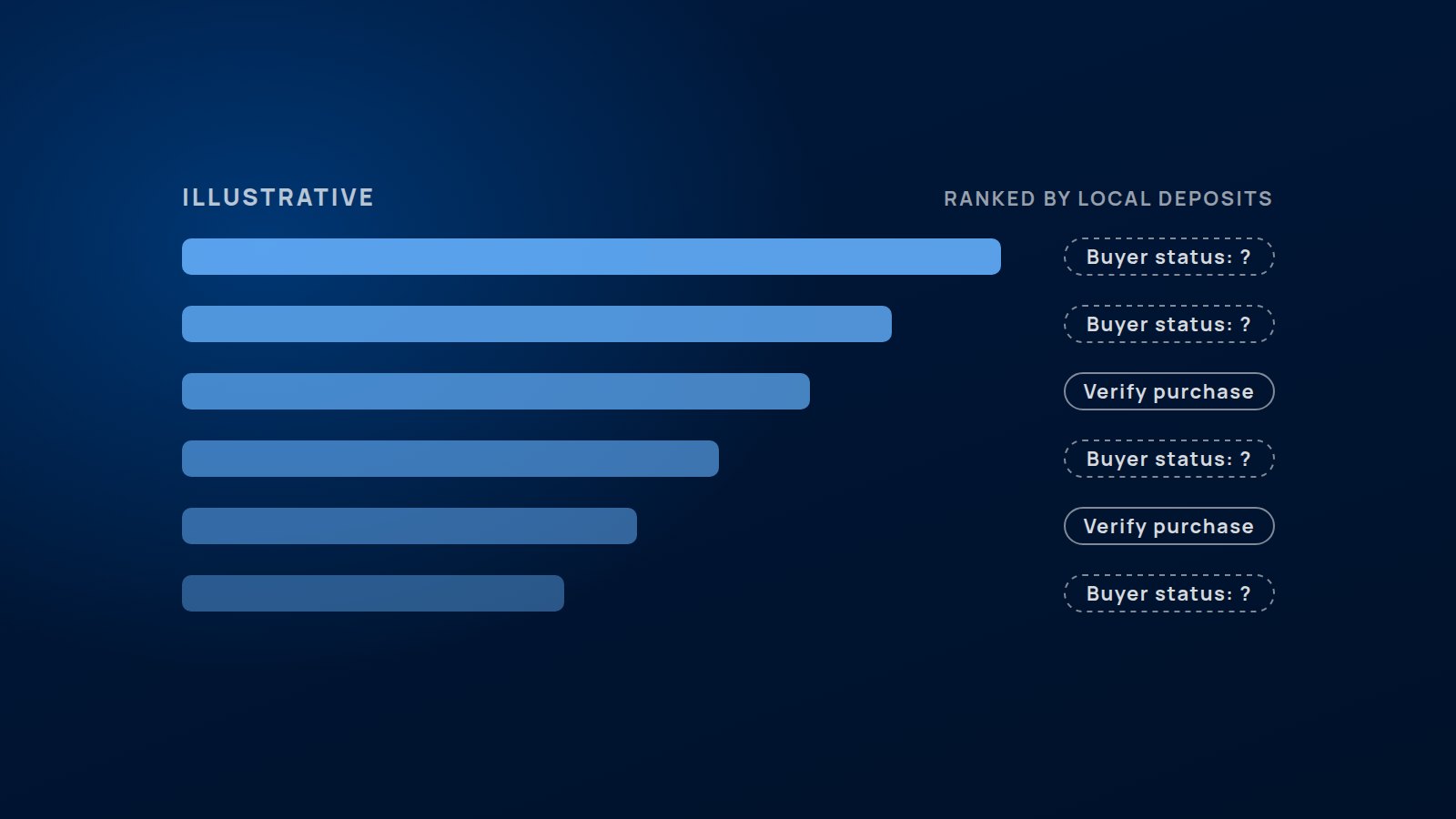
Pull the FDIC’s list of banks in your market and sort it by local deposits. It gives a premium sales team a useful starting point: a finite set of institutions with a reported presence nearby.
Just don’t mistake it for a buyer list.
Deposits show presence, not a hospitality budget. A bank can report a large balance at a small number of offices. That figure alone won’t tell you how many local clients it serves, whether it entertains them at games, or who controls the decision.
A “known buyer” flag needs an address. Without a venue, product, and date, it cannot establish a bank’s relationship with your building. A blank field means the status is unknown; it isn’t evidence that the bank said no.
At Pacers, a list of large companies never answered the question I needed before making a pitch: How would this buyer actually use the space? Recurring client access calls for a different conversation than a few priority events.
Here’s a useful exercise for Monday. Pick three banks whose relationship with your venue is unclear. For each, record any current or past purchase, where that information came from, and when it was last checked. Then write down one question you need answered before recommending a product. Keep “unknown” visible where you don’t have evidence.
That exercise doesn’t finish the prospecting work. It shows which accounts warrant more research and which assumptions have been sitting in the CRM as facts.
A2B researches those gaps with premium teams and helps them prioritize outreach.
If your bank prospect list is ranked by size alone, it’s worth a second look.